Peripheral Neuropathy

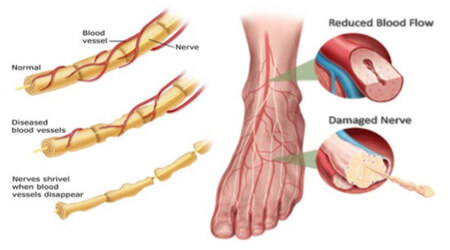
Commonly referred to peripheral nerve disease, it is deterioration to the nerves of the peripheral nervous system, which ends in the feet. This, in turn, leads to communication problems between the spinal column and its associated muscles, bone and tissue of the lower extremity. Approximately 15 million individuals suffer from peripheral neuropathy.

Each individual has nerves, arteries and veins that run parallel to one another throughout the body, including the feet. Encircling these vascular bundles are tunnels that keep the bundles in an organized fashion. These tunnels are of a certain size that usually does not change in growth, as they are made of fibrous sheaths that cross horizontally to the bundle. It is common to see ligaments and other fibrous tissues cross the bundles as well.

Neuropathy occurs when something has caused the nerves to deteriorate or become damage in these canals. The nerves will be forced to press up against these canals causing the symptoms one sees in neuropathy. A part of the nerve could be herniated, or “pushed through” the fibrous sheaths making up the canals. There are a variety of things the nerves could do in order for the symptoms to be present including compression, swelling, pinches, ligament touching, or irregular nerve gliding due to interaction with fibrous sheet.

Symptoms

- Tingling, burning, or numbness in the feet

- Pain in the feet and legs

  • Can sometimes feel as if stepping on “pins and needles”

- Decreased pain sensation and loss of feeling

  • May cause loss of feeling in terms of tightness of shoes, which could lead to other problems

- Muscle weakness in the legs and changes of muscle strength

  • In feet, may cause you to fall and the arches in feet to collapse

- Feel of changes in skin temperature

  • Cold – means circulation is being cut off (skin color can be blue)
  • Hot – means infections, injury or inflammation (skin color can be red)

- Cramps in feet and calf muscles

Common Causes

- Diabetes

- Trauma

  • Compression, pinching, cutting, projectile injuries (i.e. gunshot wounds)
  • Strokes

- Sprains or dislocations

- Direct pressure onto the nerve

- Liver failure

- Renal failure

- Nutritional deficiencies

  • Vitamin B deficiency, hypothyroidism, polphyria

- Toxic Agents

- Collagen Vascular Conditions

Treatment

- Anti-inflammatory Medications

- Injections

- Orthotics

- Nerve Decompression Surgery

  • outpatient procedure in which the compressed nerves are release by opening narrowing tunnels that surround them and sometimes embedding the nerves into muscle

In order to give accurate diagnosis, Dr. David Jenson uses a state-of-the art neurosensory test which was developed in the world-renowned Johns Hopkins University. This test is PAINLESS for the patient and exams each nerve group of each foot. The results give Dr. Jenson important information in regards to nerve functioning, which helps in determining the best treatment option to alleviate the condition. If surgery is elected, usually the results are permanent!