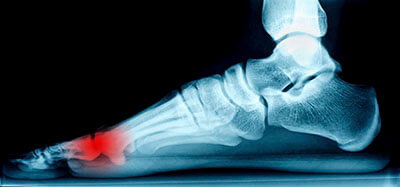
Morton’s neuroma may develop when the tissue around one of the nerves leading to your foot begins to thicken. When this occurs, you may experience some discomfort as if you were standing on a pebble stuck in your shoe. Most symptoms will not appear outwardly and will be experienced in the form of a sharp, burning pain in the ball of the foot, as well as a stinging or burning feeling in the toes that may sometimes lead to numbness.
Some factors that contribute to the formation of Morton’s neuroma include wearing high heels or ill-fitting shoes that put extra pressure on your toes or the balls of your feet. There has also been a tie to the development of Morton’s neuroma and certain high-impact sporting activities. Activities you may want to avoid from participating in too frequently include both jogging and running. Too much repetitive trauma can cause a strain on the feet and increase the chances of developing a foot complication. Other sports that require the use of tightly worn shoes, such as skiing or rock climbing, may also increase your chances of getting Morton’s neuroma. Certain foot deformities can also lead to the development of Morton’s neuroma. Some of these deformities that increase the likelihood of getting this condition include bunions, hammertoes, and flat feet.
Treatment for Morton’s Neuroma will often vary, depending on the severity of a patient’s condition. In some cases, injections may be helpful for alleviating pain. Another form of treatment is decompression surgery, in which a podiatrist will work to alleviate the pressure on the nerve. In more severe cases, full removal of the nerve would be required.
If you’d like more information about Morton’s neuroma, we suggest you consult with a podiatrist for a proper diagnosis and recommended treatment plan.
