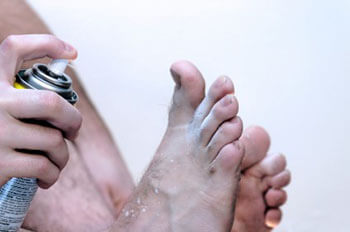
Athlete’s foot is a fungal infection that’s highly contagious and can be spread through direct skin to skin contact as well as indirect contact. Athlete’s foot can be spread directly when an uninfected person touches the infected area of someone who has athlete’s foot. The condition can be spread indirectly through contaminated surfaces, clothing, socks, shoes, bed sheets, and towels.
Areas that are known to be damp, warm, or humid are commonly known to be more susceptible to carrying the fungal infection. With that being said, you should use caution around swimming pools and communal showers to avoid picking up athlete’s foot. If you know you have a weaker immune system, you should also be sure to use caution around these types of environments.
Those who are affected by athlete’s foot may experience symptoms such as cracking, dryness, flakiness, itchiness, redness, or scaliness of the skin of the foot or in between the toes. Oozing, crusting, swelling, and the formation of blisters are other symptoms that may arise due to athlete’s foot.
If athlete’s foot goes untreated, there is a high risk that it may spread from toe to toe. With this in mind, it’s highly recommended that you meet with a podiatrist for a professional diagnosis. Your podiatrist can give you information about treatment options that best suit your case.
